Showing posts with label villain. Show all posts

Wednesday, September 18, 2024

Synopsis: Thrust Into Television

Many movie character actors found steady work and arguably more exposure with the advent of television. 


PETER BROCCO (1903-1992) was an American film, television, and stage actor. He has over 300 credits during his sixty-year career. Typically uncredited in his pre-television roles, it was in this medium that he became a frequent actor in Westerns, dramas, and comedies. 

Brocco kept busy from the late 1930s through the 1980s with various ethnic and supporting roles as a clerk, a shop owner, a bartender, a doctor, or a villain. There was always a spot in films where he could fill a scripted character. His supporting role in Spartacus (1960) is of note, as is One Flew Over the Cuckoo's Nest (1975) as the wheelchair-bound patient.

But Brocco was most visible on the more intimate small screen, like displaying a comedic talent portraying Peter the Waiter for eight episodes of The George Burns and Gracie Allen Show (1955–1956). He was cast in criminal roles for The Adventures of Superman, as an Organian council member in a Star Trek episode. He appeared three times in the police drama, Adam-12, and three times in The Rockford Files. For the television miniseries, The Winds of War (1983), he played the father of Ali MacGraw's character. He kept working until 1991, a little over a year before his death.

Wednesday, August 14, 2024

Synopsis: Thrust Into Television

Many movie character actors found steady work and arguably more exposure with the advent of television.


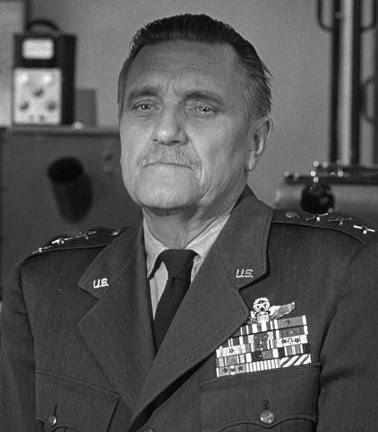
MORRIS ANKRUM (1897-1964) 

Ankrum was an American radio, television, and film character actor appearing in countless films from the 1930s to the mid-1950s. His credits were largely concentrated in the Western and Science-Fiction genres, often as authority figures, scientists, numerous military figures, judges, bankers, and even psychiatrists in more than 270 films and television episodes. His portrayal of Native Americans was less believable, however. Because of his commanding facial countenance, Ankrum could also play believable villains. Between numerous and varied television appearances, he could be seen as a judge on twenty-two episodes of Perry Mason. Somewhat ironic since Ankrum had a law degree from the University of Southern California. A career he pursued before getting the acting bug.

Discover more about Ankrum's career at IMDB.

Monday, November 7, 2022

Reel Character Series


Henry Daniell (Charles Henry Pywell Daniell 1894-1963) was an English actor who had a long career in the US on stage and in cinema. He came to prominence for his portrayal of villainous roles in films many classics in the Thirties and Forties but it Is unfair to limit him to these roles.

Daniell made his first appearance on the stage 1913, and a year later on the London stage at the Globe Theatre in a walk-on role. By the 1920s he was appeaaring on Broadway which led to film roles in the early talkies. MGM cast him a few late Thirties films. But it was at Warner Bros where Daniell found fame in The Private Lives of Elizabeth and Essex (1939) and the following year as the treacherously slimy Lord Wolfingham in The Sea Hawk (above). It proved to be a seminal year for Daniell with a small tole in the comedy/satire The Great Dictator, then it was back to MGM for The Philadelphia Story.

He had a lead role in The Body Snatcher (1945), with Boris Karloff and Bela Lugosi, and many swashbuckling roles finished out the decade and into television in the early Fifties. He appeared on numerous popular series during this decade. Daniell was in countless dramatic roles of varying ethnicity and as a straight man in a few comedies. His last role was a small uncredited appearance as the British Ambassador in the 1964 film My Fair Lady.

Tuesday, July 19, 2022

The Definition of Burly


Richard Reeves (1912-1967) was an American character actor whose height, heavy build, and general "tough guy" appearance led to being frequently cast as bullies, robbers, and mob enforcers in modern crime dramas, as well as in many Westerns and even sitcoms. When he was not menacing, he could play a not-so-bright lug in comedies.

Reeves grew up in an affluent section of Queens, New York, and studied music in school. At 18, he worked as a seaman in the 1930s aboard ships on the New York-Havana route. He kept busy in the 1940s in countless films, often uncredited. But it was television viewers that recognized the face for appearing on nearly every western during the 1950s, whether it was The Lone Ranger, Zorro, The Roy Rogers Show, Sugarfoot, Maverick, Tales of Wells Fargo, Bat Masterson, or Tombstone Territory. 

Friday, August 27, 2021

Reel Character Series


Brad Dexter (Boris Michel Soso 1917-2002) was an American supporting actor and film producer. Known for his tough-guy crime drama or western villain roles, he was credited under several names early in his career. At the advice of actor/director John Huston, he became Brad Dexter, landing roles in Huston's film, The Asphalt Jungle (1950) followed by a breakthrough role as a smarmy villain in RKO's The Las Vegas Story (1951), starring Victor Mature and Jane Russell. RKO cast him in a similar part in the weaker, Macao (1952), also with Russell, with RKO signing him to a contract. Dexter was the villain to John Payne in the hard-hitting, 99 River Street (1953) followed by the captivating, though rather implausible, Violent Saturday (1955) and Between Heaven and Hell (1956), both for director Richard Fleischer. Television kept him busy in bit parts on numerous popular shows during the late Fifties and early Sixties.

His most famous film is probably the gunslinger in The Magnificent Seven (1960). Dexter will forever be overshadowed by the big box office competition dominating the film. His friendship with Frank Sinatra reached its peak when he saved 'Ol Blue Eyes from drowning during the production of None but the Brave (1965). Dexter was later awarded a Red Cross medal for his bravery. Grateful, Sinatra made him vice president of Sinatra Enterprises. Dexter joined Sinatra in, Von Ryan's Express (1965) but a friendship with Sinatra could be fleeting. He produced Sinatra's espionage film, The Naked Runner (1967). Speculation surrounds his clashing with the director and Sinatra over creative differences. Their two-year friendship possibly came to a screeching halt. It was back to television for Dexter in the Seventies to help finish out his career.