Showing posts with label westerns. Show all posts

Wednesday, November 13, 2024

Synopsis: Thrust Into Television

Many movie character actors found steady work and arguably more exposure with the advent of television. 


FRANK FERGUSON (1899-1978)

Frank Ferguson was a character actor who made his film debut in 1940. In that decade, he appeared in modern-day dramas as a detective, a father, and a reporter, as well as being cast in the occasional comedy. Based on his distinct barrel voice, his ever-present mustache, and an everyman's face, Ferguson was a natural in Western films, nearly two hundred. A few of those are quite notable, but Ferguson was often uncredited. He could play anything from an outlaw, a sheriff, a disgruntled farmer, or a friendly, though maybe dishonest, store clerk. He was a very valuable and natural performer whom many directors found a character worthy of his talents. 

However, the bespectacled actor was most seen from his frequent television appearances over twenty-plus years. In a wide variety of roles, Ferguson was often a public servant. He might be a doctor, a military officer, a bank teller, a police officer, or a businessman. With little surprise, he even played a hobo on the Leave It To Beaver comedy. He was the familiar face of many popular dramas, and of course, nearly every television Western. His final appearance was on the pioneer era series, Little House on the Prairie, in 1976.

Wednesday, September 18, 2024

Synopsis: Thrust Into Television

Many movie character actors found steady work and arguably more exposure with the advent of television. 


PETER BROCCO (1903-1992) was an American film, television, and stage actor. He has over 300 credits during his sixty-year career. Typically uncredited in his pre-television roles, it was in this medium that he became a frequent actor in Westerns, dramas, and comedies. 

Brocco kept busy from the late 1930s through the 1980s with various ethnic and supporting roles as a clerk, a shop owner, a bartender, a doctor, or a villain. There was always a spot in films where he could fill a scripted character. His supporting role in Spartacus (1960) is of note, as is One Flew Over the Cuckoo's Nest (1975) as the wheelchair-bound patient.

But Brocco was most visible on the more intimate small screen, like displaying a comedic talent portraying Peter the Waiter for eight episodes of The George Burns and Gracie Allen Show (1955–1956). He was cast in criminal roles for The Adventures of Superman, as an Organian council member in a Star Trek episode. He appeared three times in the police drama, Adam-12, and three times in The Rockford Files. For the television miniseries, The Winds of War (1983), he played the father of Ali MacGraw's character. He kept working until 1991, a little over a year before his death.

Wednesday, September 11, 2024

Synopsis: Thrust Into Television

Many movie character actors found steady work and arguably more exposure with the advent of television. 


BARTLETT ROBINSON (1912-1986) 

Robinson was an American actor who performed on radio, stage, film, and television for five decades. The mustachioed Robinson and his recognizable voice were often cast in mostly serious roles of authority, such as military officers, wealthy ranchers, sheriffs, corporate executives, doctors, and judges, whether in Westerns, dramas, or playing the straight man in comedies.

Wednesday, September 4, 2024

Despicable Them


There is a long list of villains in Western films. They represented the timeless battle between evil and good. The mainstream popularity of television, beginning in the mid-fifties, offered a daily or weekly dose of characters deserving of a house slipper thrown in their direction. Several women were cast as rotten individuals, of course, but my focus centers on bull-headed male characters and the actors who portrayed them.

These villains "owned" the townsfolk by intimidation. They were self-centered, devious, narrow-minded, and filled with hate. They ignored truth and refused to acknowledge facts: selective deafness. They could rouse a bunch of spineless citizens
, likely after an extended saloon visit, into lynching an innocent man.

I have chosen six of the most widely recognized television Western "bad guys" who worked the small screen in the same era. Their careers are indelibly etched as villains, though each had their turn in modern dramas and as decent men. 

Beginning clockwise from the upper left:

Robert J. Wilke  (1914-1989) was considered the best golfer in Hollywood during the 1950s. His demeanor on the links changed completely, however, when given a script, and he was likely television's most hated Western villain. His grizzled voice, rustic dental grille, and curling lip made him the villain's poster child. Wilke could be a disgruntled rancher, a leader of outlaws, or just looking to start trouble.

John Anderson (1922-1992) portrayed President Abraham Lincoln three times due to his overall facial resemblance. The versatile actor was more repetitive when it came to the Western, however. Anderson might play a widowed patriarch who takes Bible passages out of context to justify his actions. One of his errant sons may be accidentally killed in a shoot-out, and he is dead-set on getting his own justice, refusing to listen to reason.

Harry Lauter (1914-1990) devoted much of his later life to his own painting and the operation of an art gallery. He knew how to perform routine stunt work, learning from a master stuntman/actor, Jock Mahoney. Lauter sort of set the groundwork for Myron Healey, who advanced the belligerent, smirking trouble-maker for the Western genre. He might come off initially as a sweetheart, but his ulterior motive soon reveals his true persona.

R. G. Armstrong  (1917-2012) was a frustrated writer and playwright, but found the better-paying job of acting much easier. Armstrong might portray a landowner, often with limited education, with a singular purpose: keeping strangers off his land. Whether a crooked sheriff or a Bible-toting townsman, he refuses to hear another point of view. His mind is made up. 

Leo Gordon (1922-2000) was a screenwriter when he was not acting. He was typically a hired gun or essentially the same as a ranch foreman. The towering Gordon, with his furrowed brow, slit eyes, no lips, and an angry baritone delivery, was a force to be reckoned with. Especially in black leather.

Myron Healey (1923-2005) continued his WW2 airman duties to retire as a captain in the United States Air Force Reserve in the early 1960s. But that discipline of cooperating with his fellow airmen vanished when playing rotten characters behind studio cameras. Healey could be despicable as the town bully, double-crosser, or stirring up trouble with an easily swayed crowd. His condescending attitude was his trademark.

Wednesday, August 14, 2024

Synopsis: Thrust Into Television

Many movie character actors found steady work and arguably more exposure with the advent of television.


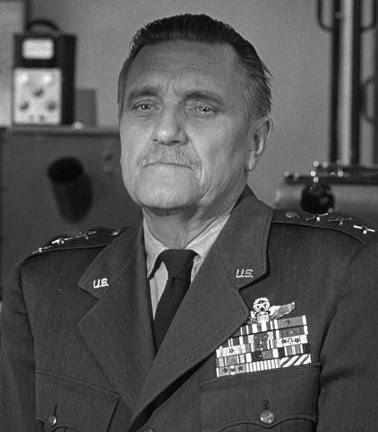
MORRIS ANKRUM (1897-1964) 

Ankrum was an American radio, television, and film character actor appearing in countless films from the 1930s to the mid-1950s. His credits were largely concentrated in the Western and Science-Fiction genres, often as authority figures, scientists, numerous military figures, judges, bankers, and even psychiatrists in more than 270 films and television episodes. His portrayal of Native Americans was less believable, however. Because of his commanding facial countenance, Ankrum could also play believable villains. Between numerous and varied television appearances, he could be seen as a judge on twenty-two episodes of Perry Mason. Somewhat ironic since Ankrum had a law degree from the University of Southern California. A career he pursued before getting the acting bug.

Discover more about Ankrum's career at IMDB.

Wednesday, July 31, 2024

Synopsis: Thrust Into Television

Many movie character actors found steady work and arguably more exposure with the advent of television. 


BEN COOPER (1933-2020) 

Though not a household name, Ben Cooper always provided a convincing performance with intensity and pathos. The American actor can be found in numerous supporting roles in films and the occasional lead in lower-budget projects. His modern-day dramas are probably lesser known. Cooper was most associated with the Western film, yet never strayed far from the television path, however. Her was a natural in Westerns, partly due to his horseman skills that began during his childhood. 

Discover more about Cooper's career at IMDB.

Friday, July 19, 2024

Synopsis: Thrust Into Television

Many movie character actors found steady work and arguably more exposure with the advent of television. 


MICHAEL PATE (1920-2008) 

Michael Pate was an Australian actor, writer, director, and producer, better known for his prolific work as a supporting actor in Hollywood films and American Television during the 1950s and 1960s. His range of characters spanned the globe. Though with only a slight variation of an accent, he may be most familiar as an American Indian, a Turkish ruler or guide, or an Eastern European spy or assassin. As a guest star, he played villains in American television comedies, including Batman (1966).

After serving during World War II, Pate had a brief acting career in his native country before heading to Hollywood in the 1950s. He appeared in over 300 television shows and films, including his most distinct introduction in 1954 for a
Climax! live production of Ian Fleming's Casino Royale. Pate played the role of "Clarence Leiter," opposite Barry Nelson's "Jimmy Bond." Two years later, he was cast in a supporting role in Danny Kaye's masterpiece comedy, The Court Jester. Numerous sources list all his films, some of which are notably famous.

During his time in the United States, Pate became an acting instructor and lecturer, and wrote many screenplays and plays for American films and television series. He appeared in nearly all the popular television Westerns during the decade as well as many adventure shows, before returning to Australia to become a television producer, winning two Logie Awards for his efforts. Pate retired in 2001 but kept busy doing voice-over work and writing screenplays.

Wednesday, March 6, 2024

Synopsis: Thrust Into Television


Many movie character actors found steady work and arguably more exposure with the advent of television. 

DOUGLAS KENNEDY (1915-1973)

The American character actor appeared in more than 190 films from the 1930s in uncredited spots, then in countless supporting roles through the 1960s. The 6' 3" Kennedy often portrayed Western villains, unscrupulous modern-day businessmen, as well as isolated romantic or positive leads in low-budget films. His long list of movie credits is nearly surpassed by his television appearances. Certainly becoming a more familiar face on the small screen. He appeared on many short-lived shows as well as long-running famous Westerns and modern-day crime series. Many of those were multiple appearances. His last credits were for three 1973 episodes of Hawaii Five-O. Kennedy died in Hawaii later that year.

Find out more about Kennedy's career at IMBD.

Wednesday, July 5, 2023

That's Either Roy or Ray


At left is Roy Roberts (1906-1975) beside Ray Teal (1902-1976). Each actor might cross over because of the character roles, anything from a crooked judge to kindly banker. They started their careers one year apart and died one year apart. Both did many Westerns on film and television. Roberts became one of the most recognized actors in television in a number of comedy series as a banker, railroad president, or governor in such popular series as The Lucy Show, Petticoat Junction, and Green Acres. Teal, on the other hand, rarely ventured into comedic roles, staying primarily in Westerns, whether in film or television. Over a dozen times he played a sheriff. His most visible role is Sheriff Roy (not Ray) Coffee on Bonanza.

Wednesday, June 21, 2023

Models First


These rather obscure actresses had similar career paths and appearances. If you are a fan of B-movies or the early days of television, you may confuse them. From left are Merry Anders (1934-2012) and Barbara Lawrence (1930-2013). As was the case for many actresses, both were noticed as models first. Lawrence had bit parts in movies but her televised work dominated. She only had a dozen years of acting before retiring. Anders, on the other hand, continued working for nearly fifty years, mostly in television. She was most visible in the television comedy, How To Marry A Millionaire for fifty-two episodes (1957-59).

Tuesday, May 9, 2023

The Aubuchon Way


Jacques Aubuchon (1924-1991) was an American character actor who kept busy from the 1950s through the 1980s. He is primarily known for his roles in a wide variety of television series.

Though Aubuchon spent most of his career on the small screen, he was in a handful of films, including Beneath the 12-Mile Reef (1953), The Silver Chalice (1954), and Thunder Road (1958) to name three. His roles varied from Westerns to modern-day dramas to comedies. His first television appearance was on the comedy Mr. Peepers (1953). He could play an informant, an outlaw, or a criminal. He somewhat specialized in untrustworthy individuals, even in comedies. His mastery of dialects made him a popular casting choice. Aubuchon perhaps is best known for his seven appearances on the wacky comedy McHale's Navy (1962-64) as the hilarious Chief Urulu.

Above, left is Jacques Aubuchon with actor J.D. Cannon 

Tuesday, December 6, 2022

Television Transition


Don Dubbins (1928-1991)


The television medium offered a career shift for some movie character actors. Many were kept busy, becoming a household face if not a name.

Don Dubbins was an American television actor in westerns and dramas from the early days of the medium throughout the 1980s. His film credits after signing with Columbia Pictures are sparse but James Cagney took a liking to him and he garnered roles in two of his films, one being, Tribute to a Bad Man. He made a quick transition to the small screen where his boyish good looks provided the best benefits. As he matured, his roles were varied, working non-stop throughout his forty-year career.


The Brooklyn-born Marine veteran typically made single appearances on most shows in such classics as Gunsmoke, Bonanza, Wanted: Dead or Alive, The Twilight Zone, Voyage to the Bottom of the Sea, The Rockford Files, and Murder, She Wrote. Additionally, he also appeared in other popular series ranging from the comedy Mork & Mindy to the police drama Hunter. However, Dubbins spent extra time with Perry Mason for seven appearances, and five roles each for Dragnet 1967 and Barnaby Jones.

Tuesday, July 19, 2022

The Definition of Burly


Richard Reeves (1912-1967) was an American character actor whose height, heavy build, and general "tough guy" appearance led to being frequently cast as bullies, robbers, and mob enforcers in modern crime dramas, as well as in many Westerns and even sitcoms. When he was not menacing, he could play a not-so-bright lug in comedies.

Reeves grew up in an affluent section of Queens, New York, and studied music in school. At 18, he worked as a seaman in the 1930s aboard ships on the New York-Havana route. He kept busy in the 1940s in countless films, often uncredited. But it was television viewers that recognized the face for appearing on nearly every western during the 1950s, whether it was The Lone Ranger, Zorro, The Roy Rogers Show, Sugarfoot, Maverick, Tales of Wells Fargo, Bat Masterson, or Tombstone Territory. 

Tuesday, June 21, 2022

An Endless Furrowed Brow


If one were to identify Robert Simon (1908-1992) it would probably be his appearances in a multitude of television westerns. But he knew few limitations, though seemingly always with a perpetual furrowed brow. Popular dramas of the Fifties and Sixties and playing the straight man in situation comedies were also staples. The Ohio-born character actor honed his craft in theater during the Forties before breaking into notable films such as The Buccaneer (1958), Compulsion (1959), The Last Angry Man (1959), and The Man Who Shot Liberty Valance (1962) in which he played Handy Strong. 

Simon's credits in television seem endless. Just a sampling of his dramatic roles was for episodes of Medic, Alfred Hitchcock Presents, State Trooper, The Millionaire, M Squad, and with three appearances on Perry Mason. Many were not surprised to see Simon pop up in the popular sitcoms of the era. He portrayed Darren Stephens' father on Bewitched, and appeared in McHale's Navy, Get Smart, and The Andy Griffith Show, among others. He made three guest appearances as hard-nosed General Mitchell on M*A*S*H. His modern roles continued in the Seventies through the mid-Eighties in countless police dramas, but it was the television western where he may be best remembered or disliked. Simon became nearly typecast with authoritarian figures, often as a general, sheriff, doctor, journalist, an attorney, or an angry land owner with an uncompromising disposition. One could almost count on one hand how many times Simon's characters smiled, coming in second only to actor, Charles McGraw.

More details can be found at https://wikimili.com/en/Robert_F._Simon

Tuesday, May 17, 2022

A Man in Demand


Peter Leeds (1917-1996) was an American actor, appearing on television more than 8,000 times with over 3,000 radio credits using his distinct voice. Hollywood and Leeds were connected at the hip. The bulk of his work took place in the 1950s and 1960s when he became highly visible as a straight man to many well-known television comedians including Bob Hope, Lucille Ball, Carol Burnett, Red Skelton, Jack Benny, and Johnny Carson. His dramatic credits include Richard Diamond, Private Detective, The Untouchables, Perry Mason, and M Squad among others. Westerns were a staple for Leeds appearing on Have Gun - Will Travel, Trackdown, and Wagon Train, and a number of lesser-known series.

Though typically uncredited, his mid-century film career was equally busy, playing everything from a police officer, detective, educator, car salesman, or any number of associates or professionals.

Note: Leeds is pictured above, right, with Robert Middleton on an episode of Bonanza.

Tuesday, April 19, 2022

Horton Hears a Tune


Robert Horton (Mead Howard Horton Jr. 1924-2016) was an American actor best known as Flint McCullough in Wagon Train (1957–1962). During his six decades of television, Horton also became known for his voice, leading him into a career in musical theater. After graduating cum laude from UCLA in the mid-Forties, he relocated from California to New York City but the struggling actor returned to California, eventually signing a contract with MGM. It was there he met fellow actors Robert Fuller and James Drury, both of whom became Horton's lifelong friends. 

The ruggedly handsome Horton, who was often not assigned a shirt, made dozens of appearances on television beginning in its infancy, most notably in several episodes of Alfred Hitchcock Presents. About a decade later he had an offbeat role as an amnesiac in the 1965-1966 television western, A Man Called Shenandoah. As a talented singer, in the 1960s Horton recorded on the Columbia Records label and performed in theaters and nightclubs all over America and Australia. He was hired as the male lead in a successful run of the musical version of N. Richard Nash's play, 110 in the Shade (aka The Rainmaker) on Broadway. Before retiring in 1989, he took a brief turn in the daytime soap, As the World Turns.

Thursday, March 17, 2022

A Familiar Television Face


Paul Carr (1934-2006) was a busy American actor of stage, film, and television for over 50 years. He was also a writer and director and headed the Play Committee of the L.A. Repertory Company. The Louisiana-born actor had a short stint in the United States Marine Corps during his late teens before launching his acting career in a New Orleans production of Herman Melville's, Billy Budd. By the middle 1950s, he was working on live television. Though his career was spent on the small screen, he garnered his first (uncredited) role for Alfred Hitchcock's, The Wrong Man, in 1955. He had supporting roles in many western series with three appearances on Laramie, Trackdown, four appearances on Rawhide, The Rifleman, Gunsmoke, The Tall Man, and The Virginian. He could always be found on popular drama series during the Sixties such as Dr. Kildare, Hawaii Five-O, The Fugitive, Twelve O'Clock High, Burke's Law, and Combat!. Carr could be seen in the science fiction series, The Time Tunnel, Land of the Giants, a notable role on the second pilot episode of Star Trek, and The Invaders. For seven episodes, he was a cast member on Voyage to the Bottom of the Sea. Carr joined the cast of Buck Rogers in the 25th Century, in 1981. With the exception of the hit, Murphy Brown, Carr finished his career on lesser-known series through 2002.

Wednesday, March 16, 2022

Bud Meets Randy


Bud Boetticher (1916-2001) was an American film director who can be held in high esteem simply for six low-budget westerns, Seven Men from Now, The Tall T, Decision at Sundown, Buchanan Rides Alone, Ride Lonesome, and Comanche Station. He achieved his major breakthrough when he teamed up with actor Randolph Scott and screenwriter Burt Kennedy to make the first film listed above in 1956. Spanning a four-year partnership, all six films are crafted with care and precision, despite some factual inaccuracies. The cinematography offers tight places within the Alabama Hills, juxtaposed to wide grand vistas, and pastoral surprises. He would stop panning and hold the camera for a moment, taking in the natural beauty near Lone Pine, California.  

These bare-bones westerns made good use of Randolph Scott as a quiet, somewhat alienated hero on a journey through a hostile landscape, crossing paths with self-serving villains. His graceful, economic physicality or his calm use of his voice is consistently compelling. Always playing a character of few words, he out-Coopered Gary Cooper. Scott's screen presence glues these films together and one cannot help but like these charming and self-assured roles.

Wednesday, December 15, 2021

Approved by Dale Evans

Penny Edwards (Millicent Maxine Edwards 1928–1998) was an American actress on stage, film, and television. The particularly obscure actress was performing on Broadway at twelve before being cast about a decade later in her first film, My Wild Irish Rose in 1947. Around this time, during Dale Evans' pregnancy leave, the vivacious blue-eyed blonde filled Evan's role opposite Roy Rogers in several B-movie western films, Trail of Robin Hood, Spoilers of the Plains, Heart of the Rockies, and In Old Amarillo, among others. Evans specifically requested her. She took a break from the saddle with two 1951 crime noir films, Missing Woman and Million Dollar Pursuit.

Though Edwards announced her retirement in 1954, she returned to appear in a number of television shows, among them were Cheyenne, The Restless Gun, Bachelor Father, The Adventures of Ozzie and Harriet, Alfred Hitchcock Presents, and Perry Mason, before ending her career with two appearances on Death Valley Days in 1958 and 1961. Her main focus after retirement was devoting herself to Christian service.

Wednesday, September 22, 2021

Transition to Television

There were solid performances by numerous B-movie actors but they never became major film stars. The new medium of television offered a career shift and kept them busy. Some became a household face if not a name.

Stacy (Stanley) Harris (1918-1973) 

Harris was a Canadian-born actor with hundreds of television appearances. Prior to his acting career, he was a newspaper reporter, boxer, sailor, and a staff cartoonist for the New Orleans Times-Picayune. Before television, Harris was best known for his role as an FBI agent on ABC Radio's This is Your FBI. His reserved vocal interpretation gave the special agent a calm authority. The radio series Dragnet also benefited from his vocal work. It is speculated that he met Jack Webb during those radio days. The two would become close personal friends.

He hit the ground running in his first film, Appointment with Danger (1950) with fellow co-stars, Harry Morgan, Paul Stewart, and Jack Webb. Alan Ladd headlined the film. In between numerous television appearances, he starred in The Mountain (1956) with Spencer Tracy. However hard he tried, his acting ability could not save the sleazy, low-budget New Orleans After Dark (1958). 

Television kept him busy with roles from westerns to crime dramas with appearances on Have Gun - Will Travel, Zane Grey Theatre, and a mayor on The Life and Legend of Wyatt Earp for twenty-three episodes. Away from the Old West were The Untouchables, 77 Sunset Strip with multiple roles on Dragnet 1967 to name a few. His life was cut short by an apparent heart attack at age 54.

Note: My TV TRANSITION series moved to this blog, now on Thursdays. Check out this first set of Monday posts below from my other site: