Showing posts with label drama. Show all posts

Wednesday, April 8, 2026

Synopsis: Bewitched by Television

Some film actors found steady work and more exposure with the advent of television. 


Dick York (1928-1992)

For those who remember actor Dick York, he has been pigeon-holed as Darrin Stephens, the mortal, suffering husband of Samantha on the fantasy-comedy series, Bewitched (1964-69). His comedic double-takes, being frequently frustrated, and often angry with the physical transformations thrust upon him by his ungrateful mother-in-law, were classic trademarks of the character. Without his perfect comedic timing, the series would not have been the hit that it was. But there was much more to the versatile actor.

Born in Fort Wayne, Indiana, and growing up in Chicago, Dick York eventually handled drama and comedy with equal ease. After a stint in radio, his movie roles gained momentum by 1950, and four years later, he was cast as a teenager in the classic science fiction film, Them!. He co-starred in three famous movie productions in the Fifties and Sixties, notably They Came to Cordura (1959) with Gary Cooper, The Last Blitzkrieg that same year with Van Johnson, and a visible role as a teacher for Inherit the Wind a year later.

By far, his television work brought the most notoriety, however. He performed on the most popular series of the era. There were multiple appearances on the Kraft Television Theatre, Studio One, Playhouse 90, The Twilight Zone, and six episodes for Alfred Hitchcock Presents that provided some comedic and dramatic stand-outs. 1959 was a pivotal year for York. While filming the Cooper film above, he completely severed his right lower back muscles during a physical scene. An injury that would plague him the rest of his life, and eventually force him to bow out of Bewitched in 1969.

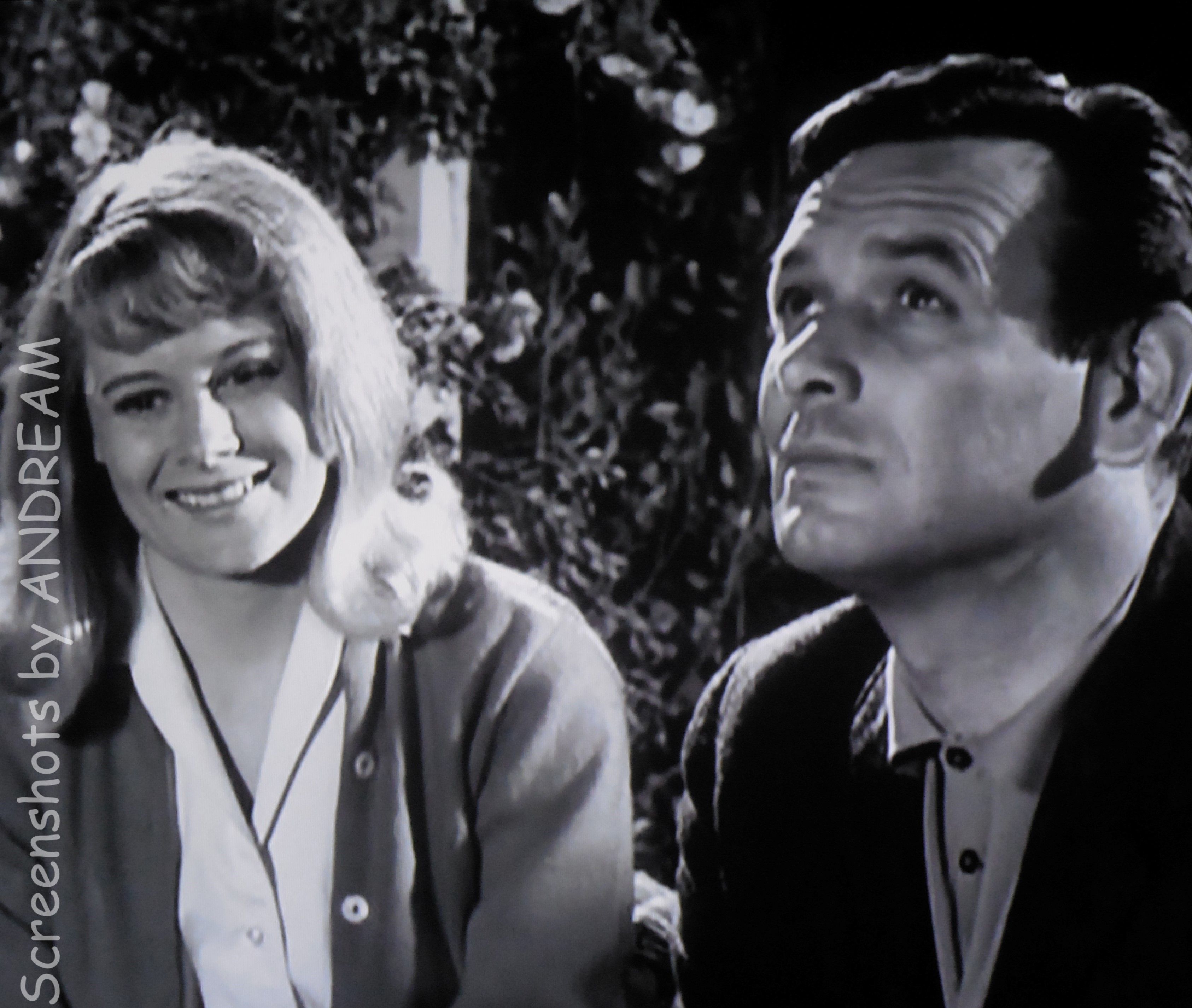
Note: Before television dominated the airwaves, radio reigned supreme. The above inset is a capture of fifteen-year-old Dick York in the situation comedy, “That Brewster Boy” (1941-45). York was the third Joey Brewster, following in Eddie Firestone Jr. and Arnold Stang's footsteps. To his right is co-star Jane Webb.

Tuesday, November 11, 2025

Casting Needs and Leeds


Peter Leeds (1917-1996) was a jack-of-all-trades American actor who had the distinction of appearing more than 8,000 times on television and heard on over 3,000 radio shows. The actor was a "household face" to the parents and their Baby Boomers during the 1950s and 1960s. In spite of his leading man looks, his work was mostly uncredited, filling needed roles in films of the 1940s and being the straight man for many well-known television comedians for three decades. The 6'1" Leeds was also a dramatic actor and Broadway performer who stayed active into the 1980s. 

On my other site, Forgotten Cinema, I select mostly unknown or obscure movies, highlighting commendable or poor production values, the actors' performances, the dialogue, and the music score, usually with humor. Leeds appeared in seven films (below) that I have reviewed, yet his brief appearances elicited little, if any mention, because his role was not significant to the overall story. The exceptions might be 99 River Street or High School Bigshot. As always, Leeds had a genuine style that brought realism to his roles, despite being included in some inferior films. 

1949    D.O.A.     Leo, a bartender
1950    Dial 1119     Martin, a policeman
1953    99 River Street     Nat Finley
1954    The Atomic Kid      Agent Bill
1956    Behind The High Wall     Detective
1957    Bombers B-52     TV quiz show director
1959    High School Big Shot     Carter, a teacher

Wednesday, November 13, 2024

Synopsis: Thrust Into Television

Many movie character actors found steady work and arguably more exposure with the advent of television. 


FRANK FERGUSON (1899-1978)

Frank Ferguson was a character actor who made his film debut in 1940. In that decade, he appeared in modern-day dramas as a detective, a father, and a reporter, as well as being cast in the occasional comedy. Based on his distinct barrel voice, his ever-present mustache, and an everyman's face, Ferguson was a natural in Western films, nearly two hundred. A few of those are quite notable, but Ferguson was often uncredited. He could play anything from an outlaw, a sheriff, a disgruntled farmer, or a friendly, though maybe dishonest, store clerk. He was a very valuable and natural performer whom many directors found a character worthy of his talents. 

However, the bespectacled actor was most seen from his frequent television appearances over twenty-plus years. In a wide variety of roles, Ferguson was often a public servant. He might be a doctor, a military officer, a bank teller, a police officer, or a businessman. With little surprise, he even played a hobo on the Leave It To Beaver comedy. He was the familiar face of many popular dramas, and of course, nearly every television Western. His final appearance was on the pioneer era series, Little House on the Prairie, in 1976.

Wednesday, October 16, 2024

Synopsis: Thrust Into Television

Many movie character actresses found steady work and arguably more exposure with the advent of television. 


JULIE ADAMS (1926-2019)

Julie Adams, born Betty Adams, moved to Hollywood to start an acting career at the age of twenty, using her given name until 1949. She was very busy on the big screen for a little more than a decade with numerous Westerns to her credit throughout the 1950s. Pale in comparison to her four decades in television, however.

She co-starred in films opposite some of Hollywood's top leading men, including James Stewart, Rock Hudson, Tyrone Power, Glenn Ford, Charlton Heston, and Joel McCrea. In the middle of all these famous actors were Ricou Browning and Ben Chapman, both playing the Creature from the Black Lagoon, whether underwater or on terra firma, respectively. The 1954 science fiction film was a popular offering for mid-century audiences and brought notoriety to Adams.

Her television roles are too numerous to mention here. A few notable guest-starring roles were for The Andy Griffith Show, in another attempt to find a love interest for the sheriff of Mayberry, five episodes of 77 Sunset Strip, three roles for Alfred Hitchcock Presents, and four episodes of Perry Mason as she sailed into the 1960s. Adams starred opposite Hollywood royalty for twenty-four episodes of The Jimmy Stewart Show and two episodes of The Doris Day Show. She guest-starred on many popular shows of the 1970s and 1980s, including Code Red, with nineteen episodes and ten episodes of Murder, She Wrote, before winding down her career in the early 2000s.

Wednesday, June 19, 2024

Synopsis: Thrust Into Television

Many movie character actors found steady work and arguably more exposure with the advent of television. 


MYRON HEALEY (1923-2005) 

Healey's characters may be despised more than others in film or television during the 1950s, thanks to his condescending delivery as a villain. When Healey was "bad," he could be despicable. He somewhat carried the torch from actor Harry Lauter, nine years his elder. He appeared in some 140 films, including more than 80 westerns, frequently for Monogram Pictures. But it was television that brought him intimate exposure. Healey served in World War II as an Air Corps navigator and bombardier, flying in B-26 Martin Marauders in the European Theatre. After the war, he continued military duties, retiring in the early 1960s as a captain in the United States Air Force Reserve.

Discover more about Healey's career at IMDB.

Wednesday, April 3, 2024

Synopsis: Thrust Into Television


Many movie character actresses found steady work and arguably more exposure with the advent of television. 
RANDY STUART (1924-1996)
Ask any of your like-minded friends and they will readily confess they never heard of Randy Stuart (Elizabeth Shaubell). Blessed with a commanding alto voice and spunky, girl-next-door attractiveness, Stuart got her acting career started with a Twentieth Century Fox contract. Typically buried in the credits, her small roles in, Sitting Pretty (1948), I Was a Male War Bride (1949) and "the girl" in All About Eve (1950) gave her some exposure and provided significant training. In what may have been her breakout role, she played the on-screen sister to Susan Hayward in the forgettable drama, I Can Get It for You Wholesale (1951). No stranger to television, she made the rounds in such anthology series as Chevron Theatre and two long-running series, The Ford Television Theatre and the Schiltz Playhouse during the early Fifties. She played the wife opposite Alan Hale, Jr. in, Biff Baker, U.S.A. (1952-54). The likable, energetic couple got caught up in trouble on their international business travels during the Cold War. It was back to the big screen for her “larger” and most famous role as the wife of Grant Williams in the 1957 Universal International’s science-fiction classic, The Incredible Shrinking Man her next to last film.

Stuart appeared for several years in television westerns, most produced by Warner Bros. for the ABC network. She had a recurring role in eighteen episodes of, The Life and Legend of Wyatt Earp, starring Hugh O'Brien, as his romantic interest. She guest-starred four times on Clint Walker's groundbreaking western, Cheyenne, in strong-willed characters during the show’s late years. Stuart was back into the spy business for a Cold War-themed episode of 77 Sunset Strip, followed by roles on Lawman, Bourbon Street Beat, The Roaring 20s, and two appearances on Hawaiian Eye before taking a five-year hiatus. Just as Stuart’s career was winding down, she returned in 1967-68 to play the wife of Harry Morgan's character, Officer Bill Gannon, on NBC's Dragnet. 1975 marked her final role in ABC's, Marcus Welby, M.D., starring a classic example of an actor transitioning from film to television, Robert Young.

Find out more about Stuart's career at IMBD.

Tuesday, June 20, 2023

Anonymous Versatility


Norma Crane (Norma Anna Bella Zuckerman 1928-1973) was an American actress on stage, in film, and a frequent performer on television. She had the ability to transform into multiple characters to the extent one might not readily recognize her. Her supporting roles in television never made her a household name, however. Throughout the 1950s, she appeared in a variety of live television dramas. One of her earliest appearances was a five-episode stint as a fellow teacher on the live Mr. Peepers comedy show starring Wally Cox in 1952. In 1956, she appeared in Alfred Hitchcock Presents, Gunsmoke, and four times in Have Gun - Will Travel. Crane found steady work on nearly every major television series in the 1950s into the 1970s such as The Untouchables, The Fugitive, The Man from U.N.C.L.E., and The Flying Nun, just to name a few. Most were single appearances. Though she did little on the big screen, she landed roles in the films, Penelope (1966), They Call Me Mr. Tibbs! (1970), and most famously as Golde in Fiddler on The Roof (1971).

Wednesday, May 24, 2023

Consider This


Few would consider that there was facial confusion during the 1960s between Mike Nichols (left), a famous director, producer, actor, and comedian (1931-2014), and the lesser-known William Redfield, an actor in theater, film, radio, and television (1927-1976). The multi-talented actors were from the same era, and both died in NYC. The photo comparison may solve any confusion. 


Likewise, few would compare these two actors, and not brothers. From left to right, 
introvert Robert Young (1907-98) and extrovert Richard Denning (1914-98). They had a facial resemblance at certain ages; both were 6' tall and died the same year. Denning was in radio, television plus numerous low-budget films. Those of a certain age may remember him as the Governor from his recurring role on the original Hawaii Five-O televison series. Young was an A-list and second banana actor in both high and lower-budget films and had huge success with two successful television series.

Tuesday, May 23, 2023

Chameleon Actress


Virginia Gregg (1916-1986) was an American actress known for her many roles in radio dramas, television series, and as a voice artist. Gregg made more than forty-five films from 1947 to 1981 in supporting roles or bit parts. Not exactly Lana Turner in the looks department, with Gregg's great vocal work in radio she could illicit the same attractiveness and in turn, shame Turner's acting ability.

As a prolific radio actress, Gregg could handle a wide range of characters from a sultry temptress to a deranged business owner. Listeners would hear her regularly on such programs as Dragnet, Gunsmoke, The Jack Benny Program, CBS Radio Mystery Theatre, and Mutual Radio Theater, to name a few. A distinction was her role as Miss Wong, Hey Boy's girlfriend, in Have Gun–Will Travel, starring John Dehner as Paladin, and in Yours Truly, Johnny Dollar, as the title character's girlfriend.

The chameleon actress whom many could not associate a name with, 
Gregg was certainly the most visible on television for over twenty years in supporting or bit roles from any vocation. She could be an angry old bitty, a revenge-filled wife, or not above committing murder. Among her notable series were 77 Sunset Strip, Bonanza, Perry Mason, Maverick, Wanted Dead or Alive, Alfred Hitchcock Presents, The Twilight Zone, Bewitched, The Waltons, and The Rockford Files. But she is probably best remembered for her many appearances in Dragnet, starting with the 1954 film. Jack Webb hired her many times to play any number of characters, but usually someone sarcastic or comedic. In the 1970s, she continued in Webb's creations, Adam-12 and Emergency!. 

Note: Before Gregg's radio career launched, she played the double bass in the late 1930s with the Pasadena Symphony and Pops. She was a member of the Singing Strings group heard initially on KHJ in Los Angeles and later on CBS and Mutual. 

Wednesday, May 17, 2023

Parallel Siblings


The Brothers Morgan
From left to right, it is Ralph Morgan (1883-1956) and Frank Morgan (1890-1949). Both were involved in radio, stage, silent, and talkies. The more drama-oriented Ralph is notable for 1937's Anthony Adverse and numerous forgotten films. He had few if any comedic roles unlike his brother Frank, who is famously noted for his hesitantly flustered, comedic delivery. None more iconic than his role as the great and powerful Oz.


Two Good Reasons
From left is Rex Reason (1928-1915), best known for low-budget films, the classic This Island Earth (1955) being his signature role. He was on the  ABC series, Roaring Twenties. His brother, Rhodes Reason (1930-1914) was an actor in television, film, and stage. The ABC network cast him on the limited-run series, Bus Stop. Both were tall, handsome leading men with distinctive baritone voices, yet not well-known to the general public. 

Monday, May 8, 2023

Yours Truly, Robert Bainter Bailey


Yours Truly, Johnny Dollar was one
 of the longest-running drama series on radio. Running from 1948 to 1962, it is regarded as one of the greatest in radio history. Dick Powell starred in the 1948 audition show but left the role for other projects, including his famous "Richard Diamond" radio series. The series went through several leads, among the more notable were Edmond O'Brien (1950-52) and John Lund (1952-54). Radio regular, Gerald Mohr, had the lead for the 1955 audition show, but Bob Bailey (above) settled into the title role for nearly 500 episodes, and his tenure is considered the best of the series. 

Bob Bailey (1913-1983) was exceptionally good, making Dollar more sensitive and thoughtful in addition to capturing realism with his voice inflections. Imperative without any visuals. He made the character his own and it separated him from the melodramatic radio detective, like the aforementioned Gerald Mohr. Tough and streetwise but not overly cynical, he
 was a 4-year Marine veteran, a police officer for a decade then changing careers to insurance investigation for the Universal Adjustment Bureau, Hartford, Connecticut. Dollar usually stuck to business, but the occasional romance would arise when getting too emotionally involved in the case. Episodes often included his girlfriend Betty Lewis, played suberbly by the sultry voice of the versatile Virginia Gregg. 

During the Bailey years, the announcer opened each episode with, "The man with the action-packed expense account, America’s fabulous freelance insurance investigator, Johnny Dollar." Each episode began with a phone call from an insurance executive asking him to work on an unusual claim. Upon hearing the assignment, Dollar could occasionally get a little irate with his superior. It might require him to journey across the US or sometimes overseas. Each case’s title was referred to as a "matter" as in, "The Forbes Matter." The show featured a stock company of supporting actors, including Harry Bartell, Vic Perrin, Mary Jane Croft, Lawrence Dobkin, Stacy Harris, Parley Baer, Howard McNear, Betty Lou Gerson, Barney Phillips, and others. 

Fishing was Dollar’s first recreational choice. On numerous episodes a client might use fishing as bait, convincing him to take on a job because of the excellent nearby fishing locations. 
He had a streak of impatience, and would occasionally not fully listen to a witness and rush off on a tangent before realizing his mistake. As the story progressed, Dollar would mention each expense item, and provide the audience with his remarks about the current case when filling out his expense account. There were no incidental expenses too small for Dollar to itemize, such as buying a 10-cent bottle of Aspirin with a sardonic comment, “I needed them." The series title is Dollar's salutation at the end of his written report, closing the case and episode.

Note: In 1960, CBS Radio shut down production on the west coast and moved its radio drama unit to New York. Bob Bailey, unwilling to relocate, gave up the role. The last Johnny Dollar, Mandel Kramer, remains a close second in popularity to Bailey. 

Friday, April 28, 2023

Hefty Baritones


Starting from left are baritones, Edward Arnold (Gunther Edward Arnold Schneider 1890-1956) and his heavyweight "successor" Robert Middleton (Samuel G. Messer 1911-77) on the right. Both could play criminals, wealthy bankers, or landowners in comedies or dramas. Sometimes mean, sometimes likable. Arnold missed the television era but was famous for his numerous first-rate films in the 1930s and 1940s. Although Middleton had a few motion pictures under his belt, he was most visible on the small screen in a wide variety of roles for nearly twenty-five years starting in the 1950s.

Tuesday, February 28, 2023

Hidden in Plain Sight


Jason Evers (1922-2005) was an American actor on stage, in film, and on television. The handsome actor often portrayed ill-fated characters. Despite consistent, strong supporting roles, he seemed hidden "in plain sight" by his fellow lead actors. Roles on Broadway led to Hollywood, with one of his earliest television multi-role characters on the hit comedy The Phil Silvers Show. His first recurring role was on the 1960 NBC Western series Wrangler. Evers made three appearances on Perry Mason before Evers starred as Professor Howe in the 26-episode ABC drama series Channing (above), based on life at Channing College and not his character's name. His most infamous role and first film is from the 1959 B-movie, The Brain That Wouldn't Die, released in 1962. Fortunately, he redeemed himself in two big-budget sci-fi films, The Illustrated Man (1969) and Escape from the Planet of the Apes (1971). Evers appeared in thirteen episodes of The Guns of Will Sonnet (1967). By 1970, Evers turned up on many television series, ranging from The Doris Day Show, The Streets of San Francisco, The Rockford Files, and many others through the 1980s. 

Tuesday, February 7, 2023

Big Small Screen Presence


Tim O'Connor (1927-2018) was an American character actor known for his steady work in television until the 1990s. By far, O'Connor's 416 appearances as Elliot Carson on Peyton Place were his most appearances on a single show. Another well-known role was playing Dr. Elias Huer in Buck Rogers in the 25th Century. Other recurring roles were on Barnaby Jones, Dynasty, The Streets of San Francisco, Cannon and six episodes of The F.B.I. O'Connor's voice and physical presence allowed him to specialize in playing various officials, physicians, military men, and police officers. Like one of his peers, David Janssen, O'Connor made a bigger impact on the small screen than in films. O'Connor's film appearances were sparse. A few include The Groundstar Conspiracy (1972), Across 110th Street (1972), Sssssss (1973), and The Naked Gun 2½: The Smell of Fear (1991). His last performance was in the film, Dreams Awake (2011) where he reunited with Erin Gray from their Buck Rogers series.

Television Ratings: 1970s Part 4

TV NIELSENS 1970s: (L-R: 76-77/77-78) 

A viewer shift began as two nostalgia sitcoms, Happy Days and Laverne & Shirley, traded the number one spot. Baretta (gray) broke into the top ten for the only time. Charlie's Angels remained steady while Welcome Back, Kotter reached its high point before disappearing after the novelty wore thin. Two shows (lavender) remained solid, with The Love Boat honing in at 14. Jack Webb's 1978 series, Project UFO (yellow), made its only appearance in the top 20 before being canceled in 1979. Of note is the umbrella program, The Big Event 1976-77 (orange), re-titled from NBC Sunday Night Movie in the hope that something from the network might stick. The production was shown at various times and days to gauge viewership patterns. In addition to the major films it broadcast, it also featured concerts, sporting events, and original television movies. 

Tuesday, December 20, 2022

Richard Kimble's Brief Encounters


A former patient returns home after a nervous breakdown to discover her father has remarried. Her stepmother wants to force her back into a sanitarium. Kimble discovers what is going on.

The Homecoming, 1964
Guest stars: Shirley Knight, Richard Carlson, Gloria Grahame

Wednesday, November 16, 2022

Word Origins


*THESPIAN

Apparently, in the sixth century B.C. there lived a Greek playwright whose name was Thespis, “Thadeus Thespis.” None of his plays or poems have lived to the present, and his name is remembered almost entirely because of the generally accepted view that it was he who invented the Greek tragedy. From his name, the adjective thespian was coined to describe, first, a tragic play, then, a tragic actor. By now the word is used as a name for any actor, tragic or otherwise. Not to be confused with SNL comedian, Jon Lovitz.

*Inspired by Charles Funk (1881–1957)

Tuesday, November 15, 2022

Richard Kimble's Brief Encounters


Kimble medical training saves the life of a young boy with a serious medical condition unknown to the kidnappers.

Never Stop Running, 1964
Guest stars: Claude Akins, Joanna Moore, Wright King

Tuesday, October 18, 2022

Richard Kimble's Brief Encounters


A terminally ill man tries to help Kimble elude Gerard but his wife's suspicions come into play.

Somebody to Remember, 1964
Guest stars: Gilbert Roland, Madlyn Rhue

Tuesday, September 20, 2022

Richard Kimble's Brief Encounters


Kimble reunites with the man who saved his life in the Korean War but his heroism left him physically and psychologically scarred.

Taps for A Dead War, 1964
Guest stars: Tim O'Connor, Lee Grant