Showing posts with label television. Show all posts

Wednesday, April 8, 2026

Synopsis: Bewitched by Television

Some film actors found steady work and more exposure with the advent of television. 


Dick York (1928-1992)

For those who remember actor Dick York, he has been pigeon-holed as Darrin Stephens, the mortal, suffering husband of Samantha on the fantasy-comedy series, Bewitched (1964-69). His comedic double-takes, being frequently frustrated, and often angry with the physical transformations thrust upon him by his ungrateful mother-in-law, were classic trademarks of the character. Without his perfect comedic timing, the series would not have been the hit that it was. But there was much more to the versatile actor.

Born in Fort Wayne, Indiana, and growing up in Chicago, Dick York eventually handled drama and comedy with equal ease. After a stint in radio, his movie roles gained momentum by 1950, and four years later, he was cast as a teenager in the classic science fiction film, Them!. He co-starred in three famous movie productions in the Fifties and Sixties, notably They Came to Cordura (1959) with Gary Cooper, The Last Blitzkrieg that same year with Van Johnson, and a visible role as a teacher for Inherit the Wind a year later.

By far, his television work brought the most notoriety, however. He performed on the most popular series of the era. There were multiple appearances on the Kraft Television Theatre, Studio One, Playhouse 90, The Twilight Zone, and six episodes for Alfred Hitchcock Presents that provided some comedic and dramatic stand-outs. 1959 was a pivotal year for York. While filming the Cooper film above, he completely severed his right lower back muscles during a physical scene. An injury that would plague him the rest of his life, and eventually force him to bow out of Bewitched in 1969.

Note: Before television dominated the airwaves, radio reigned supreme. The above inset is a capture of fifteen-year-old Dick York in the situation comedy, “That Brewster Boy” (1941-45). York was the third Joey Brewster, following in Eddie Firestone Jr. and Arnold Stang's footsteps. To his right is co-star Jane Webb.

Tuesday, July 8, 2025

Acting for Beans

Below are four Hollywood personalities (and one dummy) who served as spokespersons for four popular coffee brands from the 1930s through the 1970s.

Virginia Christine
San Francisco's Pioneer Steam Coffee and Spice Mills was the original name behind Folgers of 1850. Employed as a teenager, James A. Folger eventually became a full partner in the company by 1865. By 1972, Folger bought out the partners and renamed the company, J.A. Folger & Co. Skipping ahead about a century, supporting actress Virginia Christine played "Mrs. Olson," a Swedish neighbor who recommended a cup of Folgers coffee as a break from the character's hectic day in television commercials. Beginning in 1965, she played the character for twenty-one years. In 1971, Christine's hometown of Stanton, Iowa, honored her by transforming the city water tower to resemble a giant Swedish-style coffee pot.

Edgar Bergen and Charlie McCarthy
Chase & Sanborn Coffee was created by the coffee roasting and tea and coffee importing company of the same name in 1864 in Boston, Massachusetts. Named for Caleb Chase (1831-1908) and James Sanborn (1835-1903). They were the first to sell ground coffee in sealed cans. When Standard Brands was formed in 1929, it acquired Chase & Sanborn until 1981 when the company merged into Nabisco. Nabisco sold Chase & Sanborn to Colombian, Alberto Duque in 1982. The Chase & Sanborn Hour/Program was a radio variety show that featured ventriloquist pioneer Edgar Bergen and sidekick Charlie McCarthy. Though their contract was not renewed after a decade on the program, their radio career continued until 1956 before breaking into television.

Margaret Hamilton
Introduced in 1892 by wholesale grocer Joel Cheek, Maxwell House Coffee was named in honor of the Maxwell House Hotel in Nashville, Tennessee, its first major customer. The blended coffee was so well-received, it became the hotel's house brew. In 1915, Cheek and Partner began advertising with the now-famous "Good to the last drop" slogan. Along this timeline, Maxwell House introduced its iconic coffee cans to seal in freshness. A 1970s campaign for Maxwell House featured actress Margaret Hamilton, famous for her role in the original, The Wizard of Oz. She played Cora, the general store owner who proudly announced that Maxwell House was the only brand she sold. 

John Zaremba
Hills Bros. has its origins with the two sons of a Maine shipbuilder, Austin Hills and Reuben Hills, aka R.J. Hills. In 1898, Edward Norton, of New York, used his United States patent on a vacuum process for canning foods, which was subsequently applied to coffee. By 1900, Hills Brothers of San Francisco were the first to pack roast coffee in vacuum-sealed cans. Late in his career, character actor John Zaremba was the primary spokesperson for Hills Bros. in the 1970s and 1980s. His character was a fictional, senior globe-hoping coffee bean buyer, hardly recognizable to those who knew him from the 1950s. But the voice was unmistakable. Zaremba was a busy actor, noted for science fiction films, but television made up the bulk of his career with numerous supporting roles. He may be best remembered as a doctor in the 1960s series, Ben Casey, and for thirty episodes as a scientist on Time Tunnel. 

Wednesday, January 8, 2025

First In Color. With Help.


Admiral Corporation Inc. is best known worldwide for its home appliances and electronics. The company was originally known as the Transformer Corporation of America, and by 1929, it was the biggest supplier of radio parts in the world. The Great Depression took its toll, and Ross Siragusa, the founder, was forced to declare bankruptcy. Later in 1934, he purchased the “Admiral” trademark, which officially became Admiral Corporation America Inc. in 1936.

Admiral’s global operations started in 1946 with the opening of its factory in Toronto, Canada, with subsequent regional entities in Mexico, Italy, Taiwan and India. In 1952, the U.S. National Television Systems Committee (NTSC) set a goal of creating an “industry color system.” At the end of 1953, Admiral introduced their first electronic color television system, the C1617A (pictured above), using a 15-inch tri-color 15GP22 CRT and other components by RCA. Sales were understandably dismal for $1,175 (over $13,000 today), a limited production run, and no color broadcasting. It would take about a decade for color sets to become profitable. By 1966, the company had a staff of over 14,000 with operations in 110 countries, and overall sales revenue skyrocketed to $414 million.

Acquired by Rockwell International in 1973, its appliance division was sold to Magic Chef, Inc., which was then acquired by the Maytag Corporation in 1986.  Whirlpool Corporation acquired Maytag in 2006. Under Whirlpool, the Admiral brand became exclusive to The Home Depot. During the 1990s, the Admiral brand name was being used on Zenith products, and for Montgomery Ward as well as VCRs made by Sharp. The television business continues with AOC International, originally Admiral Overseas Corporation, an international brand of LCD and HDTV display devices.

Wednesday, December 11, 2024

The Roy Huggins Affair

Screenwriter, novelist, and producer Roy Huggins had a significant influence in Hollywood, most notably in television. Below are three who were indirectly and directly impacted by Huggins.


IRVING BACON (1893-1965) was an American character actor who always had a role to play, no matter how small, in nearly five hundred films. He often played comical everyday men and was singled out by his trademarked surprised expression. He is perhaps best remembered as the soda jerk in the comedy, Never Give a Sucker an Even Break (1941), or the musical, Holiday Inn (1942), as the cagey wagon driver. In later years, Bacon would also be cast in serious roles, whether in Westerns or modern-day dramas. Bacon had roles on television's Maverick and 77 Sunset Strip. Both lead characters from those shows, Bret Maverick and Stu Bailey, were created by Roy Huggins.


VICTOR JORY (1902-1982) was a Canadian-American actor of stage, film, and television. He was initially cast in romantic leads. In Shakespeare's fantasy play, A Midsummer Night's Dream (1935), he portrayed Oberon and 
eighteenth-century costume dramas. His career would turn one-hundred-eighty degrees, becoming most identified as a sinister villain in Westerns. A case in point is Dodge City (1939), a ruthless outlaw gang member. His mid-career creased face brought him a wide variety of roles as a Native American Indian or a detective in modern crime dramas in film and television. Nearing the end of his career, Jory had a definitive role to use his trademarked tight-lipped delivery as an old-school FBI agent from the 1930s in "The Attractive Nuisance" (1977), an episode of Huggins's The Rockford Files.


ADELE MARA (1923-2010) was an American actress, singer, and dancer who appeared in mostly forgettable films. She was most prolific in the 1940s with such average films as The Tiger Woman (1945) and Exposed (1947) before turning to the new medium of television in the 1950s through the 1960s. The beauty was married to Roy Huggins from 1952 until his death in 2002. Born Adelaide Delgado, her brother, Luis Delgado, was frequently cast in The Rockford Files series. He was James Garner's long-time personal assistant, as well. By the way, that's Rod Cameron above. He guest-starred as Jack Chilson on a 1976 episode of
The Rockford Files. 

Wednesday, September 11, 2024

Synopsis: Thrust Into Television

Many movie character actors found steady work and arguably more exposure with the advent of television. 


BARTLETT ROBINSON (1912-1986) 

Robinson was an American actor who performed on radio, stage, film, and television for five decades. The mustachioed Robinson and his recognizable voice were often cast in mostly serious roles of authority, such as military officers, wealthy ranchers, sheriffs, corporate executives, doctors, and judges, whether in Westerns, dramas, or playing the straight man in comedies.

Wednesday, September 4, 2024

Despicable Them


There is a long list of villains in Western films. They represented the timeless battle between evil and good. The mainstream popularity of television, beginning in the mid-fifties, offered a daily or weekly dose of characters deserving of a house slipper thrown in their direction. Several women were cast as rotten individuals, of course, but my focus centers on bull-headed male characters and the actors who portrayed them.

These villains "owned" the townsfolk by intimidation. They were self-centered, devious, narrow-minded, and filled with hate. They ignored truth and refused to acknowledge facts: selective deafness. They could rouse a bunch of spineless citizens
, likely after an extended saloon visit, into lynching an innocent man.

I have chosen six of the most widely recognized television Western "bad guys" who worked the small screen in the same era. Their careers are indelibly etched as villains, though each had their turn in modern dramas and as decent men. 

Beginning clockwise from the upper left:

Robert J. Wilke  (1914-1989) was considered the best golfer in Hollywood during the 1950s. His demeanor on the links changed completely, however, when given a script, and he was likely television's most hated Western villain. His grizzled voice, rustic dental grille, and curling lip made him the villain's poster child. Wilke could be a disgruntled rancher, a leader of outlaws, or just looking to start trouble.

John Anderson (1922-1992) portrayed President Abraham Lincoln three times due to his overall facial resemblance. The versatile actor was more repetitive when it came to the Western, however. Anderson might play a widowed patriarch who takes Bible passages out of context to justify his actions. One of his errant sons may be accidentally killed in a shoot-out, and he is dead-set on getting his own justice, refusing to listen to reason.

Harry Lauter (1914-1990) devoted much of his later life to his own painting and the operation of an art gallery. He knew how to perform routine stunt work, learning from a master stuntman/actor, Jock Mahoney. Lauter sort of set the groundwork for Myron Healey, who advanced the belligerent, smirking trouble-maker for the Western genre. He might come off initially as a sweetheart, but his ulterior motive soon reveals his true persona.

R. G. Armstrong  (1917-2012) was a frustrated writer and playwright, but found the better-paying job of acting much easier. Armstrong might portray a landowner, often with limited education, with a singular purpose: keeping strangers off his land. Whether a crooked sheriff or a Bible-toting townsman, he refuses to hear another point of view. His mind is made up. 

Leo Gordon (1922-2000) was a screenwriter when he was not acting. He was typically a hired gun or essentially the same as a ranch foreman. The towering Gordon, with his furrowed brow, slit eyes, no lips, and an angry baritone delivery, was a force to be reckoned with. Especially in black leather.

Myron Healey (1923-2005) continued his WW2 airman duties to retire as a captain in the United States Air Force Reserve in the early 1960s. But that discipline of cooperating with his fellow airmen vanished when playing rotten characters behind studio cameras. Healey could be despicable as the town bully, double-crosser, or stirring up trouble with an easily swayed crowd. His condescending attitude was his trademark.

Wednesday, July 5, 2023

That's Either Roy or Ray


At left is Roy Roberts (1906-1975) beside Ray Teal (1902-1976). Each actor might cross over because of the character roles, anything from a crooked judge to kindly banker. They started their careers one year apart and died one year apart. Both did many Westerns on film and television. Roberts became one of the most recognized actors in television in a number of comedy series as a banker, railroad president, or governor in such popular series as The Lucy Show, Petticoat Junction, and Green Acres. Teal, on the other hand, rarely ventured into comedic roles, staying primarily in Westerns, whether in film or television. Over a dozen times he played a sheriff. His most visible role is Sheriff Roy (not Ray) Coffee on Bonanza.

Wednesday, June 21, 2023

Models First


These rather obscure actresses had similar career paths and appearances. If you are a fan of B-movies or the early days of television, you may confuse them. From left are Merry Anders (1934-2012) and Barbara Lawrence (1930-2013). As was the case for many actresses, both were noticed as models first. Lawrence had bit parts in movies but her televised work dominated. She only had a dozen years of acting before retiring. Anders, on the other hand, continued working for nearly fifty years, mostly in television. She was most visible in the television comedy, How To Marry A Millionaire for fifty-two episodes (1957-59).

Tuesday, June 13, 2023

A Natural Talent


Frank Overton (1918-1967) was an American actor of stage, film and television. He had the ability to project an air of authority into his diverse roles with a countenance and pointed vocal delivery. He is well known for the roles as Sheriff Heck Tate in To Kill a Mockingbird (1962) and General Bogan in Fail Safe (1964).

But Overton is best known for his many television roles from the early 1950s through the 1960s, from Westerns to contemporary dramas. In a standout episode, he appeared in an episode of The Twilight Zone with Gig Young, called "Walking Distance" in 1959 (pictured above with Gig Young). His sensitive and compassionate portrayal anchored his character in reality. Other work included The Fugitive, 1963, and two guest appearances on the drama series Perry Mason playing a priest and a deputy. Overton appeared six times on The United States Steel Hour and in four episodes of Route 66. In ideal casting, he played Major Harvey Stovall in the series Twelve O'Clock High. One of his last television roles was on a Star Trek episode in 1967. The entertainment world lost a great talent much too soon.

Tuesday, May 23, 2023

Chameleon Actress


Virginia Gregg (1916-1986) was an American actress known for her many roles in radio dramas, television series, and as a voice artist. Gregg made more than forty-five films from 1947 to 1981 in supporting roles or bit parts. Not exactly Lana Turner in the looks department, with Gregg's great vocal work in radio she could illicit the same attractiveness and in turn, shame Turner's acting ability.

As a prolific radio actress, Gregg could handle a wide range of characters from a sultry temptress to a deranged business owner. Listeners would hear her regularly on such programs as Dragnet, Gunsmoke, The Jack Benny Program, CBS Radio Mystery Theatre, and Mutual Radio Theater, to name a few. A distinction was her role as Miss Wong, Hey Boy's girlfriend, in Have Gun–Will Travel, starring John Dehner as Paladin, and in Yours Truly, Johnny Dollar, as the title character's girlfriend.

The chameleon actress whom many could not associate a name with, 
Gregg was certainly the most visible on television for over twenty years in supporting or bit roles from any vocation. She could be an angry old bitty, a revenge-filled wife, or not above committing murder. Among her notable series were 77 Sunset Strip, Bonanza, Perry Mason, Maverick, Wanted Dead or Alive, Alfred Hitchcock Presents, The Twilight Zone, Bewitched, The Waltons, and The Rockford Files. But she is probably best remembered for her many appearances in Dragnet, starting with the 1954 film. Jack Webb hired her many times to play any number of characters, but usually someone sarcastic or comedic. In the 1970s, she continued in Webb's creations, Adam-12 and Emergency!. 

Note: Before Gregg's radio career launched, she played the double bass in the late 1930s with the Pasadena Symphony and Pops. She was a member of the Singing Strings group heard initially on KHJ in Los Angeles and later on CBS and Mutual. 

Tuesday, May 9, 2023

The Aubuchon Way


Jacques Aubuchon (1924-1991) was an American character actor who kept busy from the 1950s through the 1980s. He is primarily known for his roles in a wide variety of television series.

Though Aubuchon spent most of his career on the small screen, he was in a handful of films, including Beneath the 12-Mile Reef (1953), The Silver Chalice (1954), and Thunder Road (1958) to name three. His roles varied from Westerns to modern-day dramas to comedies. His first television appearance was on the comedy Mr. Peepers (1953). He could play an informant, an outlaw, or a criminal. He somewhat specialized in untrustworthy individuals, even in comedies. His mastery of dialects made him a popular casting choice. Aubuchon perhaps is best known for his seven appearances on the wacky comedy McHale's Navy (1962-64) as the hilarious Chief Urulu.

Above, left is Jacques Aubuchon with actor J.D. Cannon 

Tuesday, May 2, 2023

You Be The Judge, Mr. Quinn


Bill Quinn
(1912-1994) was an American film and prolific television actor. He appeared in more than 150 roles over seven decades, starting in the 1920s in silent films. He was the father-in-law of comedy legend, Bob Newhart.

The versatile Quinn acquitted himself in every role, whether uncredited or supporting in dramas or comedies. Viewers could often find him in court as a judge, in a police uniform, or in other service-related occupations. It is his television appearances that brought him the most attention. By far it was his thirty-eight appearances as a cast member on The Rifleman as Frank Feeney and eighty-eight appearances on Archie Bunker's Place as a blind patron. Though his single appearances are too numerous to chronicle here, his other multiple guest star roles in a series include, Wanted: Dead or Alive, Perry Mason, Hawaiian Eye, McHale's Navy, Bonanza, Ironside, as the father of Mary Richards for The Mary Tyle Moore sitcom and four various roles on The Rockford Files. True to form, Quinn played Judge Tomlinson on Owen Marshall, Counselor at Law, and as Judge Tesman on Arrest and Trial. 

Tuesday, August 16, 2022

Television Transition


Christine White (1926-2013) was an American actress almost exclusively known for her television work in more than 50 television series. She retired from acting in 1976. Prior, White was active in summer stock theatre, being named Most Outstanding Actress at Cape Cod Playhouse for her portrayal of Millie in Picnic. A native of Washington, D.C., she attended the University of North Carolina at Chapel Hill, where she earned an undergraduate degree in English and then began acting in stage productions. She also earned a master's degree in speech and drama at Catholic University. She also studied at the Actors Studio in New York City where she became friends with James Dean. She eventually moved to New York to further her theatrical career.

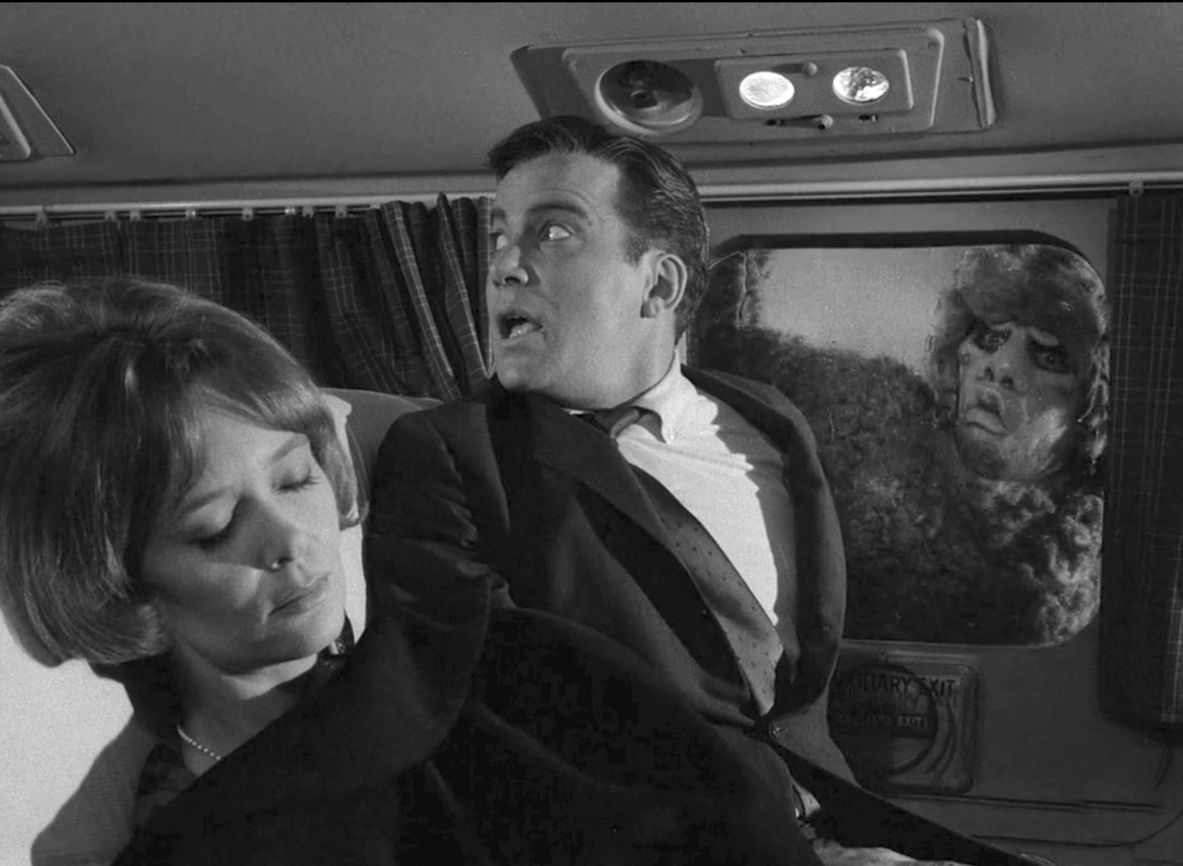
Though White appeared in a few feature films, her 24-year career was spent in television for such series as Bonanza, Have Gun–Will Travel, The Rifleman, The Loretta Young Show, The Untouchables, Father Knows Best, The Fugitive, and in three episodes of Perry Mason. But White is probably best known for her second appearance on The Twilight Zone in the episode, Nightmare at 20,000 Feet (1963) as the wife of a terrified William Shatner who seems to be the only witness of a furry creature tampering with the airliner's wing. No one believes him until the plane is inspected after landing. 

Note: In 2011, she was the honored guest speaker at the annual James Dean Memorial Service in Fairmount, Indiana.

Wednesday, July 6, 2022

Reel Character Series


Allison Hayes (Mary Jane Hayes 1930-1977) was an American film and television actress often cast either in good or bad women roles. The statuesque brunette was an obvious model candidate and competed in the Miss America pageant in 1949. Like many attractive actresses wanting to get at least a toe through the acting door, her "exposure" led her to Hollywood and Universal Pictures by 1954. She had a small role in the comedy, Francis Joins the WACS, then, via a contract dispute, signed with Columbia Pictures in 1955 with a more significant role in, Chicago Syndicate opposite Dennis O'Keefe. That same year, she was the fiancé of Rod Cameron in, Double Jeopardy She appeared in the 1956 films, Steel Jungle, and Mohawk. That same year she suffered a broken arm after a riding accident during the filming of Gunslinger. After recovering, she began appearing more on television.

In 1958, Hayes' most infamous role—being a blonde notwithstanding—was the female out for revenge in the first woman's lib film, The Attack of The 50 Foot Woman. That same year she was a Communist operative duped by secret agent, Gene Barry, in Hong Kong Confidential and teamed with Barry again for seven episodes of his television series, Bat Masterson. The following year she was the female lead in Counterplot opposite Forest Tucker. It was back to television for five appearances on Perry Mason from 1960-65. She continued her occasional movie bit parts in the 1963 comedy, Who's Been Sleeping in My Bed, and the Elvis Presley musical-comedy, Tickle Me, in 1965. She ended her career with two appearances on, Gomer Pyle: USMC, in 1967.

In spite of the low-budget projects and many secondary roles, she accounted for herself surprisingly well as a professional actress. By the 1970s, Hayes became terminally ill from lead poisoning and was later diagnosed with leukemia. She died at the age of forty-six.

Tuesday, May 24, 2022

Well-hidden Professional


Philip Coolidge (1908-1967) was an American film and stage actor almost exclusively as a supporting player. His first film was Boomerang (1947). In his later films, he was a small-town mayor in Inherit the Wind (1960), Dr. Cross in North by Northwest (1959), and Mr. Porter in The Russians Are Coming The Russians Are Coming (1966). His final role, as Fingers Nelson, was in the gangster comedy, Never A Dull Moment (1968). Yet it was television that kept him most busy.

The physically lean Coolidge, whose balding, and severe angular facial profile made him look older than his years, could appear as an angry citizen, an insurance agent, a clerk, or a sly criminal. He could also play victimized roles, exacerbated by his crestfallen demeanor. As the trained professional he was, Coolidge was adept with comedic scripts as well. Some of his best were his three of six appearances on, Alfred Hitchcock Presents, The Perfect Murder (1956), De Mortuis (1956), and The Dusty Drawer (1959). The latter, in which Coolidge's character, Mr. Tritt, an uppity bank teller, is suspected of stealing money from the bank by Dick York, his boarding house roommate. Around this time Coolidge made two appearances on Have Gun - Will Travel, three appearances on The Gertrude Berg Show as Professor Burke, and he played Throckmorton, the shopkeeper in an episode of The Twilight Zone (1962), "A Piano in the House." He was a cast member in 1964 on The Farmer's Daughter series as Chester Cooper.

Wednesday, September 22, 2021

Transition to Television

There were solid performances by numerous B-movie actors but they never became major film stars. The new medium of television offered a career shift and kept them busy. Some became a household face if not a name.

Stacy (Stanley) Harris (1918-1973) 

Harris was a Canadian-born actor with hundreds of television appearances. Prior to his acting career, he was a newspaper reporter, boxer, sailor, and a staff cartoonist for the New Orleans Times-Picayune. Before television, Harris was best known for his role as an FBI agent on ABC Radio's This is Your FBI. His reserved vocal interpretation gave the special agent a calm authority. The radio series Dragnet also benefited from his vocal work. It is speculated that he met Jack Webb during those radio days. The two would become close personal friends.

He hit the ground running in his first film, Appointment with Danger (1950) with fellow co-stars, Harry Morgan, Paul Stewart, and Jack Webb. Alan Ladd headlined the film. In between numerous television appearances, he starred in The Mountain (1956) with Spencer Tracy. However hard he tried, his acting ability could not save the sleazy, low-budget New Orleans After Dark (1958). 

Television kept him busy with roles from westerns to crime dramas with appearances on Have Gun - Will Travel, Zane Grey Theatre, and a mayor on The Life and Legend of Wyatt Earp for twenty-three episodes. Away from the Old West were The Untouchables, 77 Sunset Strip with multiple roles on Dragnet 1967 to name a few. His life was cut short by an apparent heart attack at age 54.

Note: My TV TRANSITION series moved to this blog, now on Thursdays. Check out this first set of Monday posts below from my other site:

Tuesday, March 9, 2021

Making Early Television More Significant


There were a few significant films, Butterfield 8 (1960), A Rage to Live (1965), and Sounder (1972), but Carmen Matthews (1911–1995) spent the majority of her career in front of television cameras. Mattews began her acting studies in the States before studying at the Royal Academy of Dramatic Art in London. Her professional acting appearance began with the Stratford-on-Avon Shakespearean Company before moving back to the United States. Her alto voice quickly became a fixture on American television, appearing in six episodes of Alfred Hitchcock Presents. Depending on its screenplay, she displayed her full range, handling dramatic or comedic roles with aplomb. Throughout the 1960s and 1970s, she appeared on many of the era's popular series as diverse as The Fugitive to M.A.S.H. The next decade found her in a significant role as Mamie Eisenhower for five appearances in the mini-series, Kennedy (1983).