Tuesday, February 14, 2023

Television Ratings: 1970s Part 5

TV NIELSENS 1970s: (L-R: 78-79/79-80) 

The ABC network was riding high in 1978-79. Two purple blocks show lost viewers, but One Day At A Time remained in the top 20. Eight Is Enough (red) remained steady. Three's Company (dark green) was riding high while its spin-off, The Ropers, had its highest viewership. As the 1970s close out, ABC's two shows were the only chink in a solid CBS domination. Taxi and Happy Days (blue) hit their high and low points, respectively. Both Charlie's Angels and Barney Miller (purple) ratings were down over the previous season.

Thursday, February 9, 2023

Twentieth Century Talkers


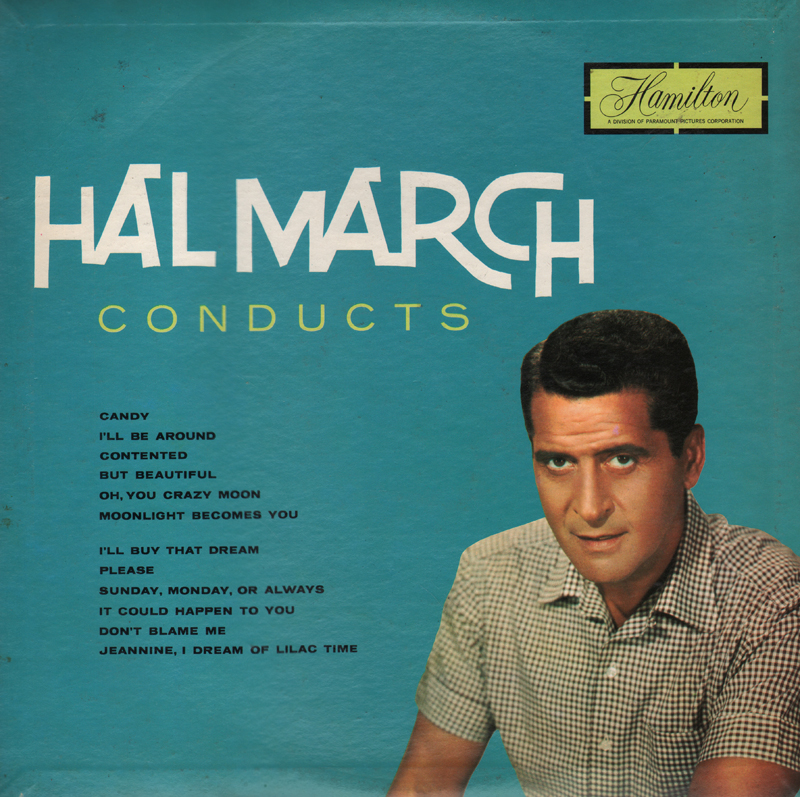
Hal March (Harold Mendelson 1920-1970) was an American comedian, actor as well as accomplished musician and conductor. March began his career in broadcasting as an announcer in San Francisco. After World War II he teamed with Bob Sweeney for The Bob Sweeney-Hal March Show on CBS Radio until 1948. He also appeared in The Adventures of Sam Spade on CBS from 1946-1949. March co-starred as Harry Morton for sixteen episodes of The George Burns and Gracie Allen Show on the NBC and CBS radio networks from the mid-1940s until 1950. When the show switched to television that year, he was replaced mid-season in 1951 by Fred Clark.

March's heyday was the 1950s. His popularity and comedic style cast him in single episodes of many popular shows of the era. The exceptions are four episodes of My Friend Irma and six appearances as himself on The Dennis Day Show. Today, March may be best known for his "guilt by association" with The $64,0000 Question scandal period. Unaware of the producer's and contestant's fraud, his career nevertheless suffered somewhat. In 1961, he played the lead in Neil Simon's first Broadway play Come Blow Your Horn, a hit that ran 677 performances. March finished out his career in 1968, though with fewer television appearances. 

Note: I have found it difficult to uncover much about Hal March's musicianship. In tribute, I have included one of his albums above. 

Wednesday, February 8, 2023

Word Origins


*WHIPPERSNAPPER

The word itself is merely a balanced extension of whip-snapper, "one who cracks a whip." Its use is most often in the sense of "one who cracks a whip loudly to make a fearsome noise because he himself would have no attention paid to him otherwise." In other words, "an insignificant, impudent, and presumptuous nobody."

Above: When they first met, Jim Rockford thought Richie Brockelman was a young “whippersnapper” on The Rockford Files episode, The House on Willis Avenue.

*Inspired by Charles Funk (1881–1957)

Tuesday, February 7, 2023

Big Small Screen Presence


Tim O'Connor (1927-2018) was an American character actor known for his steady work in television until the 1990s. By far, O'Connor's 416 appearances as Elliot Carson on Peyton Place were his most appearances on a single show. Another well-known role was playing Dr. Elias Huer in Buck Rogers in the 25th Century. Other recurring roles were on Barnaby Jones, Dynasty, The Streets of San Francisco, Cannon and six episodes of The F.B.I. O'Connor's voice and physical presence allowed him to specialize in playing various officials, physicians, military men, and police officers. Like one of his peers, David Janssen, O'Connor made a bigger impact on the small screen than in films. O'Connor's film appearances were sparse. A few include The Groundstar Conspiracy (1972), Across 110th Street (1972), Sssssss (1973), and The Naked Gun 2½: The Smell of Fear (1991). His last performance was in the film, Dreams Awake (2011) where he reunited with Erin Gray from their Buck Rogers series.

Television Ratings: 1970s Part 4

TV NIELSENS 1970s: (L-R: 76-77/77-78) 

A viewer shift began as two nostalgia sitcoms, Happy Days and Laverne & Shirley, traded the number one spot. Baretta (gray) broke into the top ten for the only time. Charlie's Angels remained steady while Welcome Back, Kotter reached its high point before disappearing after the novelty wore thin. Two shows (lavender) remained solid, with The Love Boat honing in at 14. Jack Webb's 1978 series, Project UFO (yellow), made its only appearance in the top 20 before being canceled in 1979. Of note is the umbrella program, The Big Event 1976-77 (orange), re-titled from NBC Sunday Night Movie in the hope that something from the network might stick. The production was shown at various times and days to gauge viewership patterns. In addition to the major films it broadcast, it also featured concerts, sporting events, and original television movies. 

Thursday, February 2, 2023

Twentieth Century Talkers


Dew Pearson (Andrew Russell Pearson 1897-1969) was one of the best-known American columnists and radio commentators of his day. He was known for his fearless approach toward high-level politicians, often creating friction. Pearson saw journalism as a means to challenge those he thought to be working against the public interest. He has been quoted as saying, "I just operate with a sense of smell: if something smells wrong, I go to work." Though he sounded fierce in print, in life was gentle, even stately.

Born in Evanston, Illinois, to Quaker parents, Pearson served with the American Friends Service Committee from 1919-1921, directing postwar rebuilding operations in Peć, which at that time was part of Serbia. In 1924, he taught industrial geography at Columbia University, and from 1925 to 1928, continued reporting on international events. By late 1932, Pearson and Robert S. Allen secured a contract with the Scripps–Howard syndicate, United Features, to syndicate a column called Washington Merry-Go-Round. Pearson's column not only revealed embarrassing news items but expanded his criticism of the Roosevelt administration's conduct during World War II. He dug into post-war investigations about the FBI, Preston Tucker, and Senator Joe McCarthy. At the time of his death, his column was syndicated to more than 650 newspapers, more than twice that of others.

In addition to radio, Pearson appeared as himself in a number of Hollywood movies, most notably in the 1951 science fiction classic, The Day the Earth Stood Still. Character actor Robert F. Simon, who somewhat resembled Pearson, played him in the 1977 NBC television movie Tail Gunner Joe, a biopic of U.S. Senator Joseph McCarthy.

Wednesday, February 1, 2023

Word Origins


*TENDERFOOT

First used in the literal sense of "having tender feet" as it applied to horses, and recorded in this sense in the late seventeenth century in England as the adjective tenderfooted. The use of the word as applied to a person is conceded to be an Americanism and probably arose also in the literal sense, referring to one who, unused to traveling, became footsore. However, the earliest recorded use of the word is not in this literal meaning, but in the figurative one of "a greenhorn, a novice." This meaning has been dated to as early as 1849 and was popularized by the emigrants to California in the gold rush of that time.

Above, Joe E. Brown starred in the 1932 comedy, The Tenderfoot, with leading lady Ginger Rogers.

*Inspired by Charles Funk (1881–1957)