Wednesday, August 28, 2024

Getting Your Bearings


The above 1940s Timken promotional advertisement showcases a futuristic design for the truck of the future, a concept created by NYC industrial designer Lurelle Guild (1898-1985). He was quite optimistic about manufacturers bringing his truck concept to reality. Only with Timken axles, of course. Among his designs displayed in art museums was his iconic cylindrical design of the 1937 Electrolux vacuum cleaner. A modified model even became a laser weapon prop in the movie, Superman and the Mole Men (1951).
 
The German-born Henry Timken (1831-1909) could not possibly have imagined such fantastic transportation in 1888. But one cannot move a wheel without bearings. He obtained a patent for an improved tapered roller bearing, and in 1899, incorporated The Timken Roller Bearing Axle Company in St. Louis. The company moved to Canton, Ohio, in 1901 as the automobile industry began to overtake the carriage industry. 

Timken entered international markets in the early 1900s, initially in Great Britain, France, and Germany. The performance of Timken bearings in the First World War made an impression on the European bearing market. Timken production increased dramatically during the 
Second World War to keep up with wartime demand. Every U.S. Jeep was built using 24 Timken bearings. It resulted in delivering more than 15.8 million bearings for those vehicles over the course of the war.

Starting in the 1960s, Timken saw greater worldwide expansion. With the purchase of a major competitor, the company doubled in size in the early twenty-first century. Today, the Timken Company is a global manufacturer of bearings and power transmission products operating in forty-two countries. Apparently, Guild's "future truck" is yet to come.

Wednesday, August 14, 2024

Synopsis: Thrust Into Television

Many movie character actors found steady work and arguably more exposure with the advent of television.


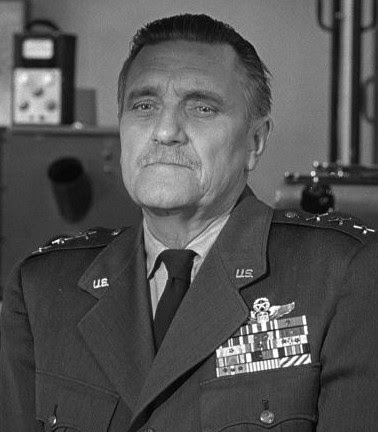
MORRIS ANKRUM (1897-1964) 

Ankrum was an American radio, television, and film character actor appearing in countless films from the 1930s to the mid-1950s. His credits were largely concentrated in the Western and Science-Fiction genres, often as authority figures, scientists, numerous military figures, judges, bankers, and even psychiatrists in more than 270 films and television episodes. His portrayal of Native Americans was less believable, however. Because of his commanding facial countenance, Ankrum could also play believable villains. Between numerous and varied television appearances, he could be seen as a judge on twenty-two episodes of Perry Mason. Somewhat ironic since Ankrum had a law degree from the University of Southern California. A career he pursued before getting the acting bug.

Discover more about Ankrum's career at IMDB.

Wednesday, August 7, 2024

Imitation Is The Best Compliment


Al Parker (1906-1985) defined the progressive look and feel of published imagery at a time of sweeping change, when Americans, emerging from the great depression and War, sought symbols of hope and redemption on the pages of our nation’s periodicals. His innovative modernist artworks created for mass-appeal women’s magazines and their advertisers captivated upwardly mobile mid-twentieth century readers, reflecting and profoundly influencing the values and aspirations of American women and their families during the post-war era. 

Parker is credited with creating a new school of illustration and was much imitated. To distinguish himself from his imitators, he worked in a variety of styles, themes, and media. Examples range from children's crayons to acrylics. He sold illustrations to Cosmopolitan, Good Housekeeping, McCall's, The Saturday Evening Post, Sports Illustrated, Town and Country, and Vogue. A stamp commemorating his art was issued by the United States Postal Service in 2001 as part of the American Illustrators Issue series. 

Wednesday, July 31, 2024

Synopsis: Thrust Into Television

Many movie character actors found steady work and arguably more exposure with the advent of television. 


BEN COOPER (1933-2020) 

Though not a household name, Ben Cooper always provided a convincing performance with intensity and pathos. The American actor can be found in numerous supporting roles in films and the occasional lead in lower-budget projects. His modern-day dramas are probably lesser known. Cooper was most associated with the Western film, yet never strayed far from the television path, however. Her was a natural in Westerns, partly due to his horseman skills that began during his childhood. 

Discover more about Cooper's career at IMDB.

Wednesday, July 24, 2024

Master of the Hat


Slayton Underhill (1913-2002) was an "under the radar" commercial illustrator, perhaps best known for his portraits and his Stetson contract featuring Hollywood celebrities. It earned him the moniker, "Master of the Hat," something the more famous Norman Rockwell would never achieve.

Underhill's early works appeared in the Saturday Evening Post, Redbook, Collier's, and Life. Two of his portraits were chosen for the covers of Time magazine. The artist was also behind advertising campaigns for Viceroy cigarettes and Lincoln and Mercury automobiles. The clever 1948 ad above suggests there are (at least) two Bing Crosbys depending on his choice of hat, like the brown "Flagship" echoing the American Airlines Flagship airliners in the background. Across the bottom (L-R) are Douglas Fairbanks, Jr., Bob Hope, David Niven, and Dana Andrews.

Friday, July 19, 2024

Synopsis: Thrust Into Television

Many movie character actors found steady work and arguably more exposure with the advent of television. 


MICHAEL PATE (1920-2008) 

Michael Pate was an Australian actor, writer, director, and producer, better known for his prolific work as a supporting actor in Hollywood films and American Television during the 1950s and 1960s. His range of characters spanned the globe. Though with only a slight variation of an accent, he may be most familiar as an American Indian, a Turkish ruler or guide, or an Eastern European spy or assassin. As a guest star, he played villains in American television comedies, including Batman (1966).

After serving during World War II, Pate had a brief acting career in his native country before heading to Hollywood in the 1950s. He appeared in over 300 television shows and films, including his most distinct introduction in 1954 for a
Climax! live production of Ian Fleming's Casino Royale. Pate played the role of "Clarence Leiter," opposite Barry Nelson's "Jimmy Bond." Two years later, he was cast in a supporting role in Danny Kaye's masterpiece comedy, The Court Jester. Numerous sources list all his films, some of which are notably famous.

During his time in the United States, Pate became an acting instructor and lecturer, and wrote many screenplays and plays for American films and television series. He appeared in nearly all the popular television Westerns during the decade as well as many adventure shows, before returning to Australia to become a television producer, winning two Logie Awards for his efforts. Pate retired in 2001 but kept busy doing voice-over work and writing screenplays.

Wednesday, July 10, 2024

The Man From Hanna-Barbera


Ed Benedict (1912-2006) started with Walt Disney in 1930 but left three years later to work at Universal Studios as an animator with Walter Lantz Productions. His ultimate fame arose after joining Hanna-Barbera in 1957 to help create their first television series, The Ruff and Reddy Show. Benedict was responsible for designing the characters on many of Hanna-Barbera’s earliest and most popular series, including Huckleberry Hound, Yogi Bear, The Flintstones, Quick Draw McGraw, and numerous others of the 1950s and 1960s, including the character design for the television show, Bewitched. His simple contour drawing approach captured each character's movements and expressions precisely. He left Hanna-Barbera at the end of the 1960s, but continued to do occasional projects for the studio, including background and layout advisor on one of Hanna-Barbera’s final cartoons, Johnny Bravo.